
Spaceship Defender
Timeline
Personal ProjectRole
Technologies
Type
Spaceship Defender
What if a browser game could demonstrate professional software engineering practices while being fun to play?
Started as an exploration of 'vibe coding' capabilities—using AI-assisted development to rapidly build complex systems—this project evolved into a fully-featured arcade-style space shooter. Built from scratch using vanilla JavaScript and HTML5 Canvas, the goal was to test how quickly I could create a polished, performant game while implementing professional software engineering practices including modular architecture, comprehensive testing, and proper separation of concerns.
Game Development Journey
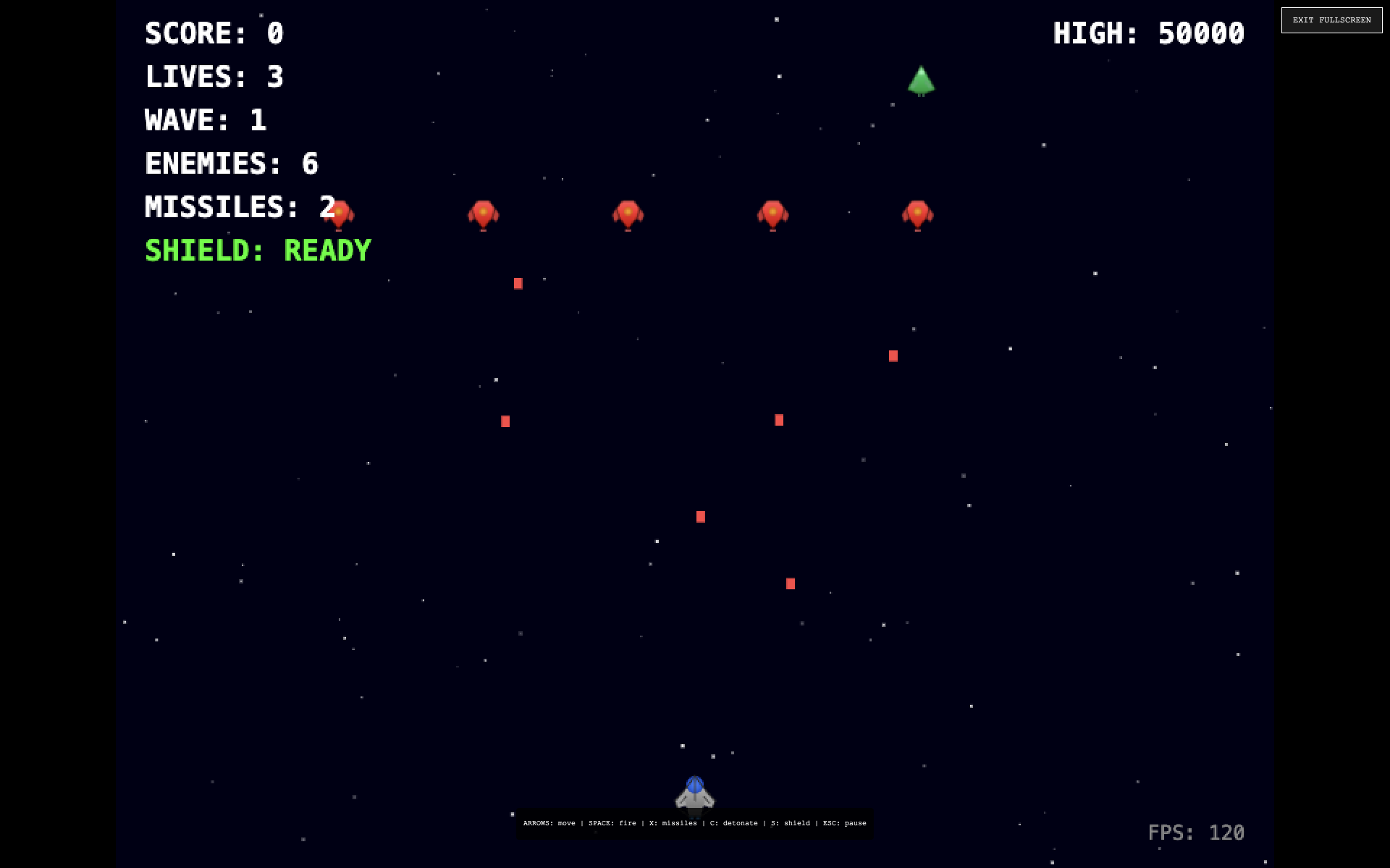
Core gameplay with multiple enemy types and weapon systems
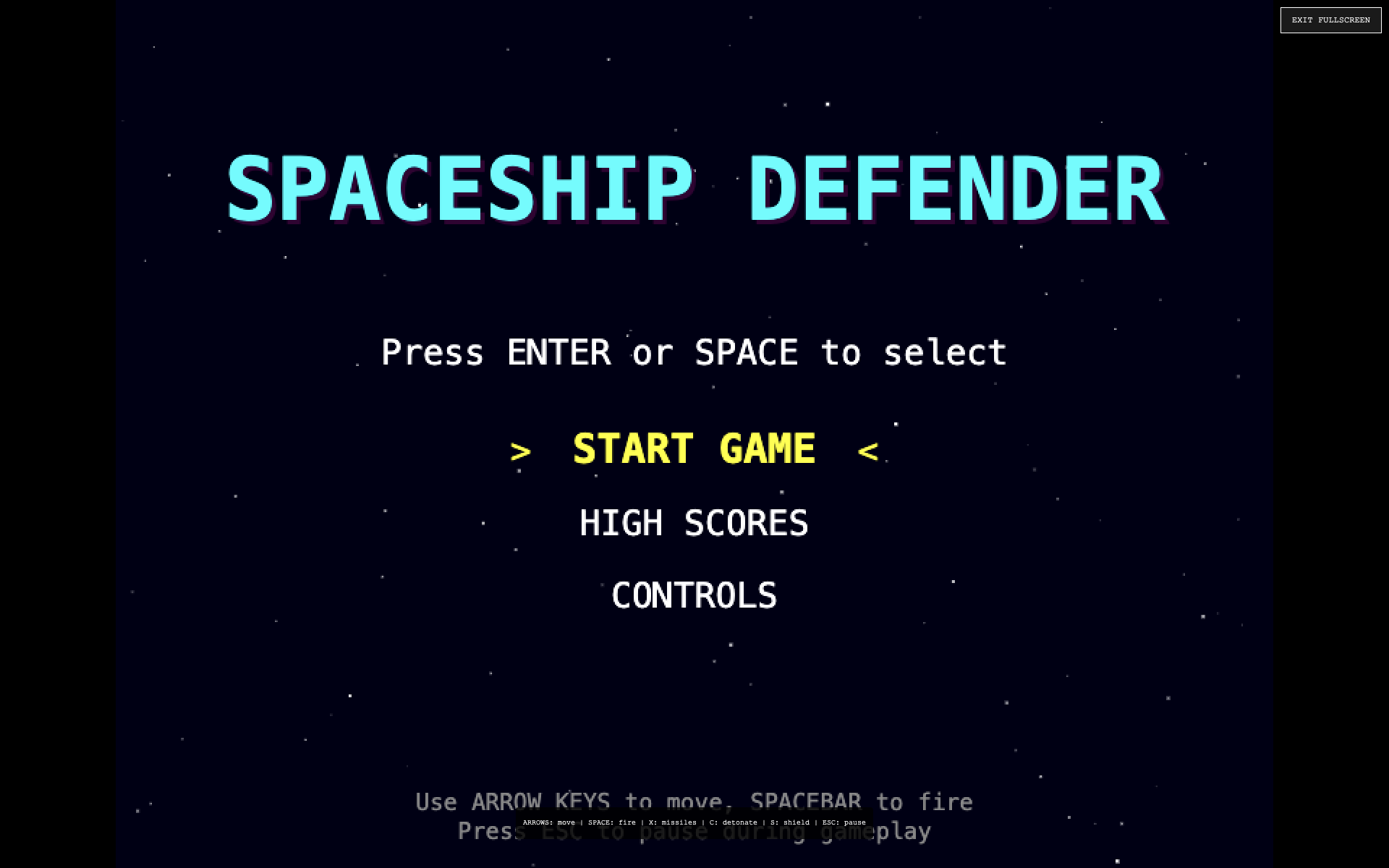
Game menu and start screen showcasing visual design
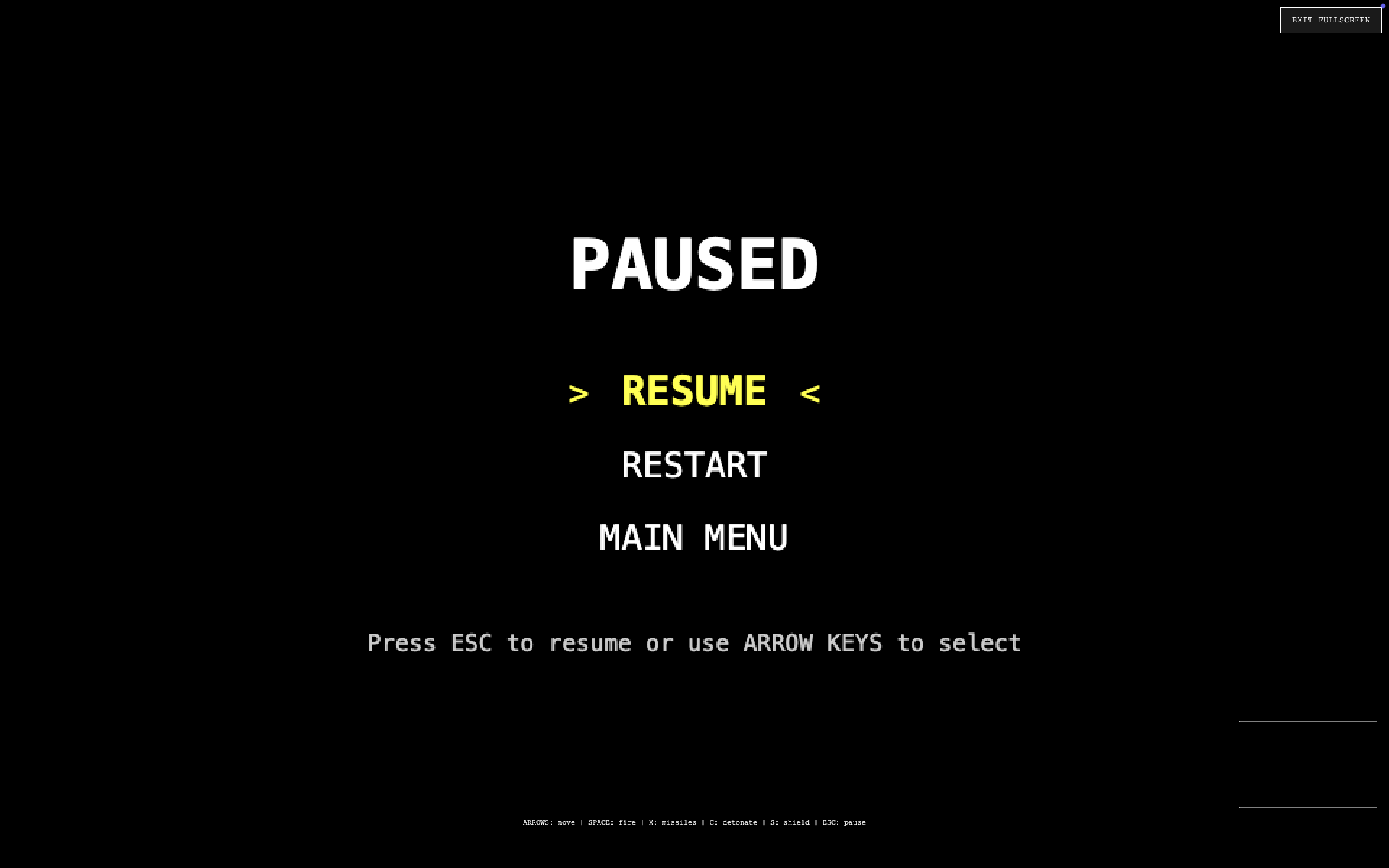
Pause screen showing game state and options
CONTEXT
Context & Goals
Started as an exploration of 'vibe coding' capabilities—using AI-assisted development to rapidly build complex systems—this project evolved into a fully-featured arcade-style space shooter. Built from scratch using vanilla JavaScript and HTML5 Canvas, the goal was to test how quickly I could create a polished, performant game while implementing professional software engineering practices including modular architecture, comprehensive testing, and proper separation of concerns.
Our Goals
Professional Architecture
Implement Entity-Component-System pattern for maintainable, scalable code.
Comprehensive Testing
Achieve high test coverage with automated testing suite.
Smooth Performance
Maintain consistent 60 FPS gameplay with optimized rendering.
The Problem
Professional Game Development
Building a browser-based game that's both fun to play and demonstrates professional software engineering practices, from architecture to testing to performance optimization.
THE PROCESS
Design Process
Entity-Component-System architecture with test-driven development
Modular System Design

Implemented ECS architecture with 5 core systems: Input System handles keyboard controls, Render System manages layered rendering with z-index, Physics System controls movement and velocity, Collision System uses spatial partitioning for performance, and Audio System generates procedural sound effects with Web Audio API. Each system operates independently, enabling easy maintenance and feature additions.
State Management
Built robust state machine managing game states (Menu, Play, Pause, GameOver) with proper transitions and event handling. Implemented event system for decoupled communication between components, reducing coupling and improving maintainability.
Performance Optimization
Achieved consistent 60 FPS through fixed timestep game loop with interpolation, spatial partitioning for collision detection, object pooling for entities, and efficient canvas rendering with layered z-index management.
Weapon Progression System
Implemented 5 weapon types with distinct mechanics: Single shot (default), Triple shot pattern, Spread shot (5-bullet fan), Homing missiles (dual-tracking), and Area damage missiles with manual detonation. Power-ups provide temporary weapon upgrades with 10-second duration, creating tactical decision-making during gameplay.
Tactical Shield System
Designed shield mechanics with strategic trade-offs: 2-second active duration with 10-second cooldown, 50% movement speed reduction while active, 20% movement speed reduction during cooldown, and 30% slower fire rate during cooldown. These penalties create meaningful tactical decisions about shield usage timing.
Boss Battle System
Created epic boss encounters every 5 waves featuring multi-phase combat mechanics, health bars with phase indicators, unique attack patterns, and missile power-up drops upon defeat. Boss battles provide satisfying difficulty spikes and reward progression.
Test Coverage Strategy
Wrote 5,257 lines of test code across 15+ test files, covering unit tests for individual components, integration tests for system interactions, and end-to-end tests for gameplay scenarios. Achieved comprehensive coverage of game logic, physics calculations, collision detection, state management, and entity lifecycle.
Testing Infrastructure
Built testing infrastructure using Hapi/Lab framework with npm test runner, watch mode for continuous testing during development, ESLint for code quality enforcement, and automated test execution. This infrastructure ensures code quality and catches regressions early.
THE IMPACT
Impact & Results
Successfully built a production-quality browser game demonstrating professional software engineering practices including modular architecture, comprehensive testing, and performance optimization. The project showcases ability to design complex systems, implement advanced features, and maintain code quality through rigorous testing.
Lines of Production Code
Clean, modular JavaScript across 27 source files
Comprehensive Test Cases
5,257 lines of test code ensuring quality and reliability
Consistent Performance
Smooth gameplay through optimized rendering and collision detection
KEY LEARNINGS
Key Learnings
Design Insights
Visual and interaction design learnings
Entity-Component-System architecture scales well for complex game mechanics
Spatial partitioning dramatically improves collision detection performance
Procedural audio generation provides flexibility without asset dependencies
Tactical trade-offs (shield penalties) create more engaging gameplay than pure upgrades
Product Insights
Why this approach is valuable
Comprehensive testing catches edge cases and prevents regressions during feature development
Fixed timestep game loops with interpolation ensure consistent gameplay across devices
Modular system design enables adding features without breaking existing functionality
Progressive difficulty and boss encounters provide satisfying gameplay progression
Specific details may be limited due to NDAs. Projects may be updated due to growth.
Interested in Working Together?
Let's discuss how I can help drive your product strategy and cross-functional initiatives.